• About DTM
    • Welcome
      • Director’s Message
      • Endorsement
      • Global Networking
      • History
    • DTM at a glance
      • Facts & Figures
      • Vision & Mission
    • SNU at a glance
      • Life at SNU
      • Living in Seoul
      • Why SNU
    • People
      • Faculty
      • Current Students
      • Invited Speakers
      • DTM Team
    • Contact Info
  • Academics
    • Curriculum
      • Coursework & Thesis
    • Extracurricular
      • Special Lectrures
      • Field Trips
      • Cultural Experiences
    • Annual Schedule
  • Admissions
    • International Students
      • Admission Eligibility
      • Preferred Qualifications
      • Application Procedure
      • Application-&-RequiredDocuments
    • Korean Students
      • Admission Eligibility
      • Preferred Qualifications
      • Admissions Application
      • Application & RequiredDocuments
    • Tuition/Financial Aid
    • FAQ
  • News & Events
    • DTM Today
    • Newsletter
  • Dream Together Seoul Forum
    • Information and Schedule
    • Videos
    • Past Forums
  • Alumni
    • Alumni Profile
    • Alumni Network
      • Alumni Notice
      • DTM Spotlight
  • About DTM
    • Welcome
      • Director’s Message
      • Endorsement
      • Global Networking
      • History
    • DTM at a glance
      • Facts & Figures
      • Vision & Mission
    • SNU at a glance
      • Life at SNU
      • Living in Seoul
      • Why SNU
    • People
      • Faculty
      • Current Students
      • Invited Speakers
      • DTM Team
    • Contact Info
  • Academics
    • Curriculum
      • Coursework & Thesis
    • Extracurricular
      • Special Lectrures
      • Field Trips
      • Cultural Experiences
    • Annual Schedule
  • Admissions
    • International Students
      • Admission Eligibility
      • Preferred Qualifications
      • Application Procedure
      • Application-&-RequiredDocuments
    • Korean Students
      • Admission Eligibility
      • Preferred Qualifications
      • Admissions Application
      • Application & RequiredDocuments
    • Tuition/Financial Aid
    • FAQ
  • News & Events
    • DTM Today
    • Newsletter
  • Dream Together Seoul Forum
    • Information and Schedule
    • Videos
    • Past Forums
  • Alumni
    • Alumni Profile
    • Alumni Network
      • Alumni Notice
      • DTM Spotlight

Building Community in DTM: Leadership Reflections from the 13th Batch


My name is Nadya Rahmatul Fadillah, and I served as the Class President of the 13th batch in the DTM Program at Seoul National University. In this role, I represented my classmates by acting as a bridge between students and the DTM Office, while coordinating communication, feedback, and various class-related activities throughout the program.

I decided to run for Class President because I genuinely wanted to support my classmates as we adjusted to a new academic environment and a new culture. Being far from home can be challenging, and I hoped to help create a positive and inclusive atmosphere where we could support one another and not feel overly pressured while going through the program together. Clear communication and strong student representation were also very important to me.

The election process was smooth and transparent, and honestly, it became a memorable moment for me. While the other candidate was very well prepared with a PowerPoint presentation, I simply spoke from the heart about how we could support each other, enjoy the learning process, and make the most of every moment we had together. I was truly grateful for the trust and support from my classmates, and that trust motivated me to take this responsibility seriously.

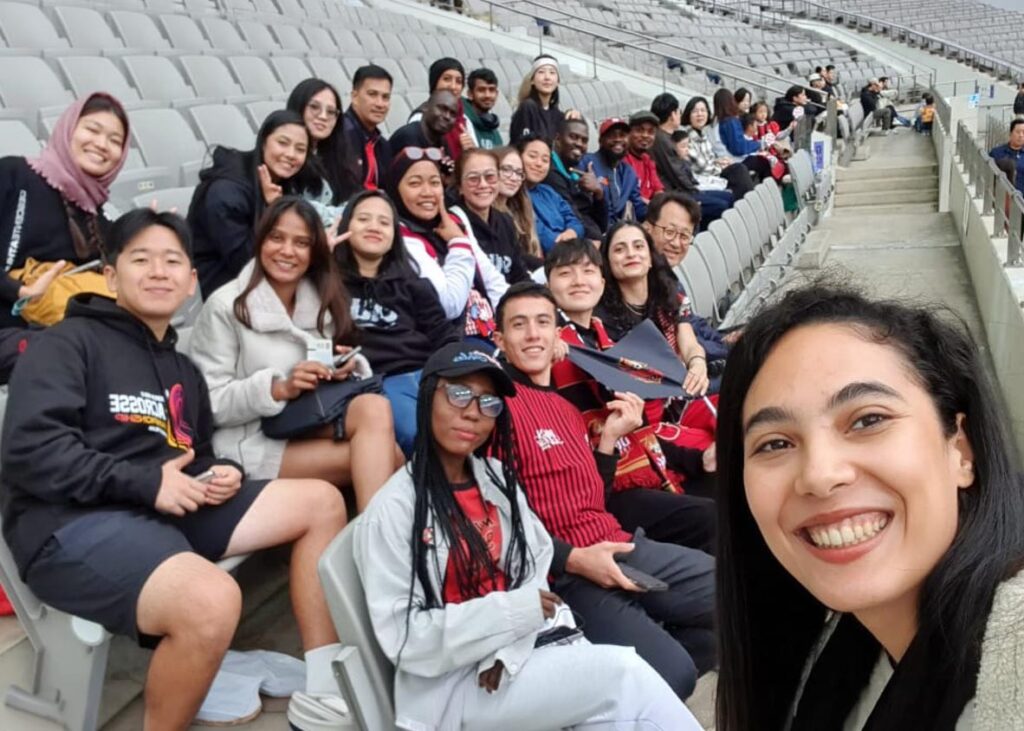
As Class President, my main priorities were ensuring clear and timely communication between students and the DTM Office, representing student concerns in a constructive and respectful manner, and supporting my classmates both academically and socially—especially during challenging periods. Above all, I wanted to help build a collaborative and inclusive class atmosphere.

One of the biggest challenges I faced was leading a class of 24 individuals with very diverse personalities and perspectives. During moments of disagreement or debate, I had to carefully consider different viewpoints and make decisions that were fair for everyone. It was not easy, but the experience taught me how to listen actively, remain neutral, and make thoughtful decisions under pressure.


Some of my most memorable moments came from our class bonding activities, such as Papero Day and Secret Santa. During these moments, the atmosphere was warm, joyful, and full of laughter. Those experiences reminded me how strong our sense of community had become and helped balance the academic pressure, making our time in the program truly meaningful.

Experiencing Korean culture also greatly enriched my journey in the DTM Program. Participating in school events, student activities, and daily campus life allowed me to better understand values such as respect, discipline, and teamwork, which deeply influenced how I approached both my studies and leadership role.
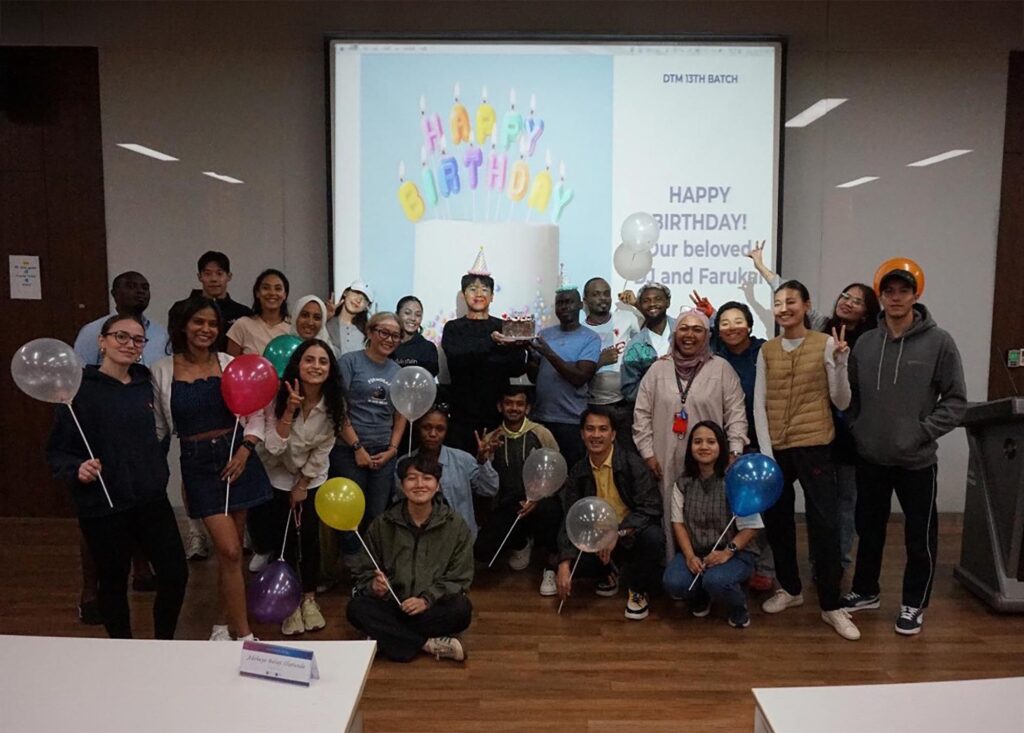

Through my interactions with the DTM Office and faculty, I learned how to present student feedback professionally and gained a better understanding of how institutional decisions are made. This helped me see leadership from both a student and an administrative perspective.

Overall, this leadership experience significantly strengthened my confidence and problem-solving abilities. It also helped me develop important skills in coordination, negotiation, and representation—skills that are highly relevant to my future career in global sport management

To future Class Presidents, I would encourage you to listen actively, communicate transparently, and always represent your classmates with empathy and integrity. Leadership in this program is not just about making decisions, but about understanding people and building trust.

For new students, I encourage you to stay open-minded, actively engage with your peers and faculty, and make the most of both the academic and cultural experiences that SNU and the DTM Program offer. More importantly, try to see your classmates as a family. Lower your ego, be patient with one another, and approach this journey as a team. You will spend a significant part of your time in Korea together, and the bonds you build here may become one of the most meaningful parts of your experience.

By Nadya Rahmatul Fadillah(13th Batch)

Beyond the Classroom: Finding Belonging at SNU through Sport and Community


At the beginning of each academic year, new students in the Dream Together Master Program arrive in Seoul with a mix of excitement and uncertainty. For many, the transition involves adapting not only to a new academic environment, but also to a different culture, language, and pace of life.

To better understand this experience, we sat down with Sukhrob Rustamov, a DTM student from Uzbekistan, to hear how he has been navigating life at Seoul National University, both inside and outside the classroom.

With a background as a former athlete in judo and weightlifting, sport has always played a central role in his life. However, his experience at SNU has shown him that sport can serve a different purpose, not only as competition, but as a way to adapt, connect, and find balance in a demanding academic environment.

Like many DTM students, Sukhrob found the initial adjustment challenging. The intensity of the program, combined with a new cultural and academic setting, required time and effort to navigate. It was during this period that he began exploring student clubs on campus, an opportunity that SNU actively encourages for all students.

“SNU offers a wide range of clubs and activities, and joining one early in the semester can really make a difference,” he shared. “It helps you find your routine and connect with people beyond your program.”

Through this process, he joined a CrossFit club, an experience that quickly became part of his daily life. More than just a form of exercise, the club provided structure, motivation, and a sense of community that supported his transition into life in Korea.

One unexpected moment stood out.

“When I went to the club, I saw Berry from the DTM Office there. It was surprising, but also very comforting,” he recalled.

For many students, the program office can initially feel formal or distant. However, encounters like this helped reshape that perception. Seeing staff members in a more informal setting made it easier for him to approach them, ultimately creating a more open and supportive relationship.

“It made me feel that the office is not something distant. It’s part of our community.”

Beyond individual experiences, this reflects a broader culture within DTM, one where academic life, personal connections, and everyday interactions are closely intertwined.

Sukhrob also emphasized the strong sense of community within his classmates. Spending long hours together in classes, group assignments, and presentations naturally builds close relationships among students.

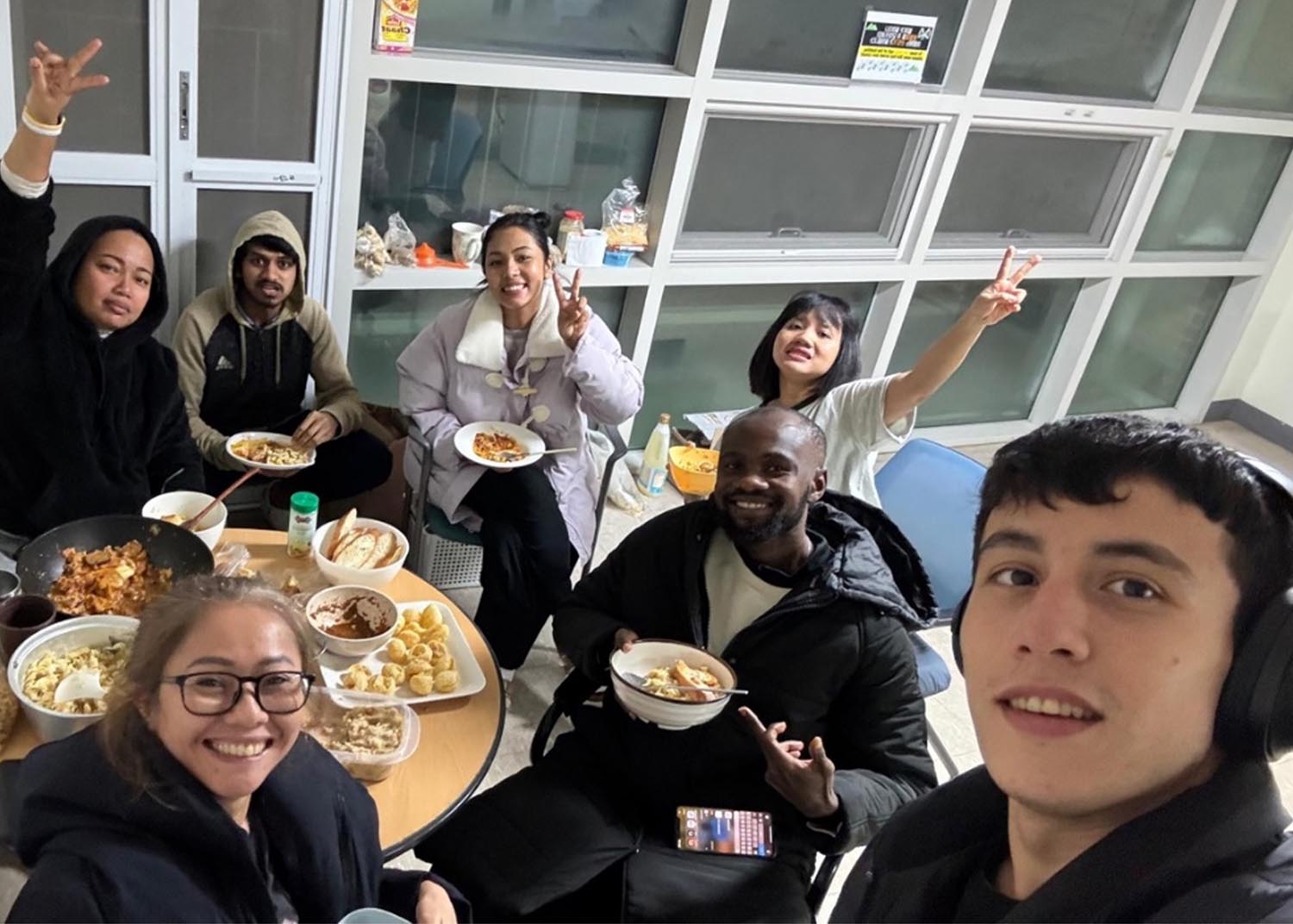
“Over time, it starts to feel like a family,” he said. “We study together, but we also spend time outside the classroom—trying different sports, sharing food from our countries, and learning about each other’s cultures.”

These shared experiences go beyond academic collaboration. They foster mutual understanding, respect, and personal growth, qualities that are essential for future sport administrators working in global and multicultural environments.

In this sense, the DTM experience is not limited to developing professional knowledge. It is also about shaping individuals who can navigate diversity, build relationships, and contribute meaningfully to the global sport community.

Reflecting on his journey so far, Sukhrob’s story highlights an important message for incoming students: success in DTM is not only about keeping up with academic demands, but also about finding balance and building connections.

At SNU, opportunities to engage in campus life—whether through sport, clubs, or informal interactions—play a key role in that process. These experiences not only support academic performance but also create a more enriching and sustainable student life.

As DTM students continue to learn, collaborate, and grow together, it becomes clear that their journey is not defined solely by the classroom, but by the community they build along the way.

By DTM Office & Sukhrob Rustamov (13th Batch)


From Kosovo to Korea: A Journey of Purpose and Pride


It all started with a casual coffee meeting. Imagine two friends: one, a well-known sports journalist, and the other, a Deputy Minister of Sports, meeting for a relaxing weekend chat. I was a young journalist, already accomplished in my field, with a drive to do more, explore new paths, and push myself to the limits. On the other hand, my friend, already reshaping Kosovo’s system for the better, spoke passionately about the program that had shaped her professionally.


At that point, I had been exploring options for pursuing a Master’s degree in Europe. But Daulina’s words about DTM, SNU, and Korea were so persuasive that they made me forget all other options. From that day, I committed to the application process, with my mind focused on completing every step to join this extraordinary program.


I had heard the phrase DTM Valedictorian before—because Daulina herself had been named Valedictorian during her DTM studies. Was that my goal from day one? I’m not sure. The uncertainty of moving to a new continent I had never visited before didn’t allow me to think much about achieving top results. However, deep down, I think it was always in my subconscious, driven by a burning desire to make my country, Kosovo, proud.


Knowing the struggles of my people and the urgent need to elevate my young nation’s name in prominent academic institutions, I saw every achievement and action of mine as a representation of Kosovo. That’s why, during my introduction at the Welcoming Dinner, I said: “During our time here we are ambassadors of our countries.”


When classes began in September, I embarked on the most rewarding journey of my life. Every lecture was a fantastic opportunity to learn. I ensured I utilized all available resources to grow. I bombarded professors with endless questions and exchanged ideas with my peers constantly. Every night before bed, I reminded myself to savor every moment, to learn, and to grow as much as possible—both personally and professionally.


Whenever I felt homesick, I found love and support in my friends. I’ll never forget that beautiful trip to Jeju Island. Whenever I faced difficulties, I found support from the DTM staff, while extracurricular activities filled me with energy. The field trip to PyeongChang is another memory I’ll always cherish.


In Korea, I was my true self, fully living this experience just the way I wanted—without hesitation and with all my heart. This allowed me to embrace everything about the country that I now consider my second home.

Even beyond DTM, my ultimate motivation remains my homeland. Kosovo still needs further development, and I hope to use the knowledge I’ve gained in Korea to help advance sports in Kosovo. Personally, I aim to contribute to organizing major sporting events in Kosovo and serve as a lecturer to share what I’ve learned with other remarkable young people.


By Leart Svecla(11th Batch)

A journey of growth and discovery

             
  1. Please introduce yourself briefly.
    I am Lovemore Mhlanga, a Zimbabwean educationist and sports administrator with 13 years of experience in sports. My journey began in 2010 when I pursued a diploma in education (PE), which opened doors to sports administration. My passion for the field led me to complete a BSc in PES, an Advanced Sport Management Course (ASMC) through the Zimbabwe Olympic Committee (ZOC), and a CIES/FIFA Executive Program in Sport Management at Nelson Mandela University. These experiences paved the way for me to pursue the DTM-Global Master in Sport Management at Seoul National University, South Korea.


  1. What did you do before DTM and what will you pursue after the DTM Program?
    Before DTM, I was a Physical Education Teacher and Sports Director at St. Peters Secondary School in Harare. I also worked as a certified doping control officer with ZOC, an author of PES textbooks, and treasurer of the Zimbabwe Wrestling Federation.
    DTM has inspired me to focus on research and policy advocacy. I plan to pursue a PhD in human resources and sustainability in sports organizations, aiming to influence governance, leadership, and policy.


  1. How was your thesis journey? What was the good and what would you have done more?
    Writing my thesis was a challenging yet rewarding journey. I examined how poor governance in Zimbabwe’s national sports organizations affects corporate sponsorship, focusing on employee engagement and leadership competence.
    Balancing data collection with academic deadlines was tough, often leaving me with only 2–4 hours of sleep. It took 38 days to complete data collection, and if I had another chance, I would engage participants earlier to gather richer insights.


  1. Please tell us about your thesis and why you chose to research in that area.
    My thesis explored how governance mechanisms—transparency, accountability, and internal control—affect employee engagement, with leadership competence as a mediating factor.
    I chose this topic after witnessing inefficiency, corruption, and financial mismanagement in Zimbabwe’s national sports organizations. These governance flaws harm organizational performance and sustainability. I hope my research contributes to stronger governance and HR frameworks.


  1. What lessons did you learn while writing your thesis, and how did you grow through the process?
    I learned patience and perseverance. After presenting my proposal, I had to completely redo my literature review, reading over 60 articles.
    This process strengthened my adaptability and critical thinking. Regular consultations with my advisor, tutor, and peers helped me apply theoretical frameworks to real-world issues. It reinforced my belief in leadership’s role in organizational performance.


  1. What are your thoughts and experiences from completing the DTM program?
    DTM broadened my global perspective on sport management, governance, and HR. I connected with professionals worldwide and gained insights into best practices in leadership and governance.
    I am deeply grateful to SNU faculty, DTM staff, and my peers for their support throughout my academic journey.


  1. As a graduating student, what will you miss most about DTM/Korea?
    I will miss the vibrant academic discussions, cultural experiences, and friendships. I will also miss Korean cuisine—especially tteokbokki—and the memorable DTM field trips and forums.


  1. What are your plans moving forward?
    I aim to improve governance and leadership in Zimbabwe’s national sports organizations by promoting accountability, transparency, and employee engagement.
    Winning the best thesis award was not just a personal achievement but a reflection of the support I received. With the skills gained from DTM, I look forward to pursuing a PhD and making a meaningful impact in sports.


By DTM Office

My Unexpected Path to Sport Management


If someone had told the younger me that I’d be winning the Best Thesis Award in a global sport management program, I wouldn’t have believed them. Sports were always a part of my life, something I loved, something that kept me moving but not something that was ever considered a real career path in my family. I decided to go into physiotherapy instead, combining my passion for movement with my interest in science.


Before joining DTM, I was a physiotherapist at Holy Family Hospital, treating local athletes to recover from injuries. One day, while casually scrolling through social media, I saw a post from a senior about the Dream Together Master (DTM) program which made me curious about sport management. At the same time, I kept hearing my athlete patients complain about the gaps in the sports industry, how things were mismanaged, and how opportunities were lost before they even began. It got me thinking: maybe this was something worth exploring. Before I knew it, I was filling out application forms, a little uncertain, but excited for whatever was ahead.


Even though I saw firsthand the struggles athletes faced, but I lacked any real-world experience working within sports organizations. This lack of exposure fueled my research curiosity and ultimately led me to my thesis topic: ‘South Asian DTM Alumni Knowledge Transfer to Home Countries: Challenges and Success Stories.’ I wanted to explore how knowledge and experiences gained in South Korea could help transform sports in underrepresented regions and whether such degrees open doors in the rigid sports structures of South Asia.


The thesis journey was an intense but rewarding experience. One major challenge was narrowing my focus; I wanted to include every fascinating insight but had to learn the art of refinement. Research isn’t just about collecting data; it’s about telling a story that matters. And if I had more time? I’d have loved to dive deeper into how innovative ideas from DTM alumni are being received and implemented or ignored back home.


My thesis journey was anything but linear. When I was settling into my research, I had to make an unplanned trip to Pakistan due to my mother’s health. While family always comes first, the setback was tough. Upon my return, my classmates had already moved forward; they’d finished gathering data, whereas I was still rushing to line up interviews. It was a stressful time, but I worked late into the night, pushed through, and even with that setback, I finished my thesis early.


Graduating from DTM is bittersweet. The program was more than just classes; it was about forming bonds with people from all over the world, class discussions on sports policies, and pushing our boundaries. I’m going to miss the dynamic learning atmosphere, the sense of community, and of course the excitement of discovering South Korea a country that became my second home.


Now that I am done with my degree, I aim to work towards the development of sports at the grassroots as well as work for programs that facilitate the empowerment of para-athletes. It will be the best of both worlds for me i.e. physiotherapy and sport management. Be it through policy-making, rehabilitation projects, or using sport as a tool to bring about change, I want to contribute to creating spaces where everyone has the opportunity to reach their full potential, irrespective of disabilities.


By Kiran Fatima(11th Batch)

A Dream Internship at KISS: Bridging sport science, management and policy


Hi, I’m Samadhi! I come from the Pearl of the Indian Ocean, Sri Lanka, and I’m a recent graduate of the DTM program, which we all know and love. Sports have been a huge part of my life since childhood—something I took up as if it were my birthright. On my first day of university, I made a spontaneous switch from Biomedical Engineering to Sport and Exercise Science, which led to a global academic journey across India, the UK, and Singapore. Since then, I’ve worked with athletes of all ages in sport-specific training, strength and conditioning, and athlete development before transitioning into sport management. Now, I’m exploring sports policy as a research assistant at the Korea Institute of Sport Science (KISS).


Internship Overview

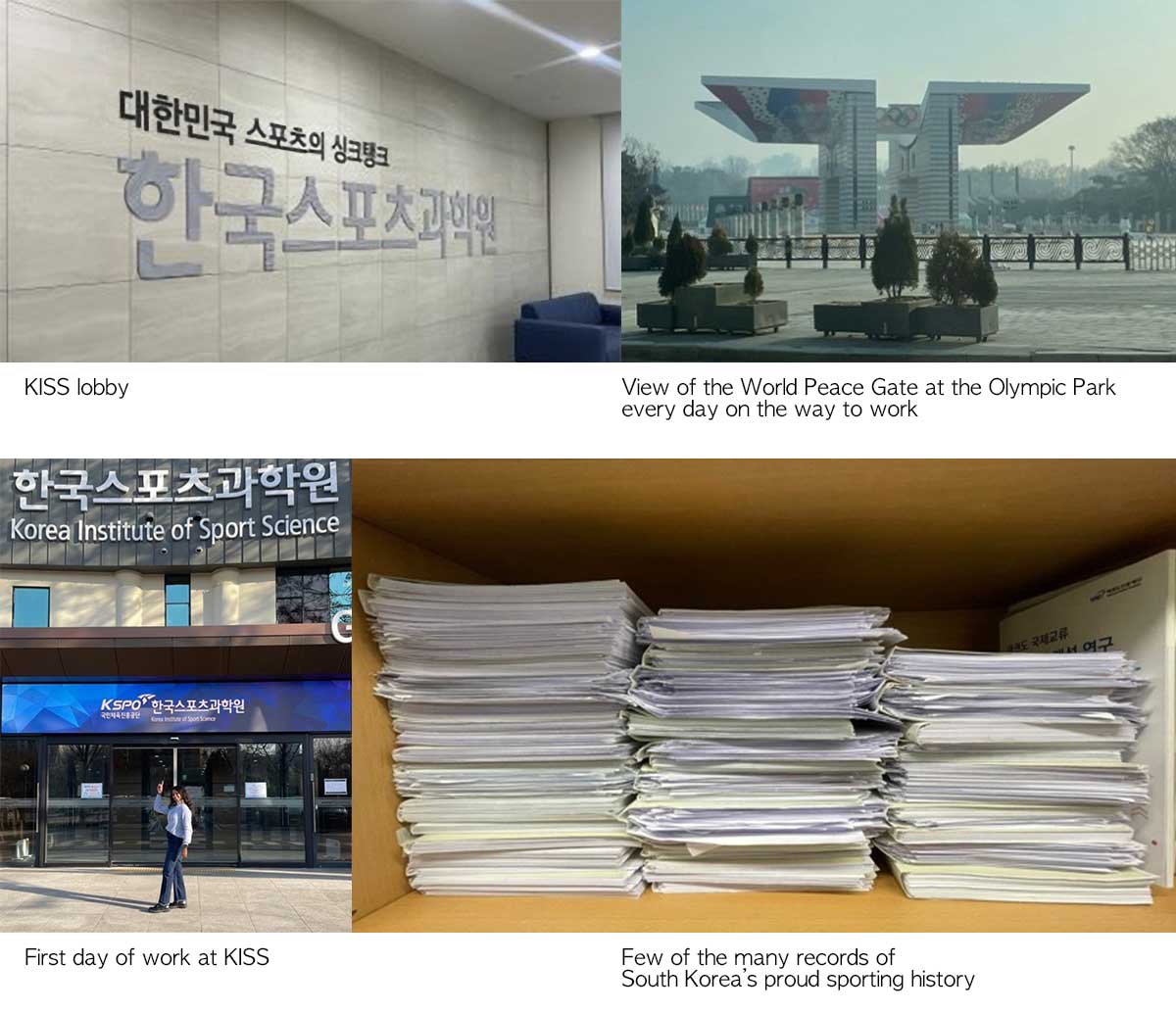
In October 2023, I visited KISS thanks to an invitation from my friend Kareem from Egypt. Standing at the entrance, I thought, “This is where I’ll be coming every day from January.” So landing this internship felt like a dream come true. I work in the sports policy department, analyzing and summarizing policies in South Korea and globally. As KISS is the official UNESCO Chair for Youth Development through Sport, I also explore impactful projects addressing key issues in sports. The best part? Seeing how these policies could be applied in Sri Lanka.


Applying DTM Skills in the Internship

DTM truly prepared me for this role. The fast-paced coursework, constant presentations, and deep dives into sports governance and international policy sharpened my ability to work efficiently and present ideas clearly. Those late-night presentation preps definitely paid off!


Most Memorable Moment

A highlight? Digging through decades of sports history—from the ’88 Seoul Olympics to the 2002 FIFA World Cup. And by that, I mean doing the ultimate intern task: spending days next to the multipurpose scanner. Sadly, some books had to go to make room for new ones (South Korea isn’t done hosting major events), but handling that history was unforgettable. Also, the countless gifts and souvenirs from Dr. Cho, our supervisor, are a definite perk!


Challenges and Overcoming

Tracking undocumented sports projects has been tough, especially in developing countries where record-keeping isn’t a priority. But thanks to the incredible DTM alumni network, help is always just a message away!


Lessons Learned

This internship reinforced how vital evidence-based approaches are for sustaining sports programs. Seeing KISS collaborate globally gives me hope that similar initiatives can thrive in Sri Lanka. With a mentor like Dr. Cho, I know I’ll always have support.


Future Plans

Having explored

sport

science, management, and policy, I now aim to tie them together—maybe even pursue a PhD. My long-term dream? Establishing a sustainable, inclusive sports school in Sri Lanka, helping athletes balance academics and sports.

This experience has been transformative. Applying my academic knowledge to real-world challenges at KISS has solidified my passion for shaping the future of sports. The DTM program has given me the tools, connections, and confidence to navigate this field, and I can’t wait to see where this journey takes me next!


Beyond the Internship: The Korean Paralympic Committee as a Stepping Stone Toward Greater Achievements


Dream, believe, and achieve—this mantra has guided me through every challenge, giving me the courage to apply for an internship in Korea.


With experience as a physical education teacher and volleyball coach in Brazil, being accepted into the DTM program was both exciting and daunting. Stepping into unfamiliar territory filled me with questions: Am I good enough? Do I have the qualifications to succeed here? Insecurity is natural, but it should never hold you back. Encouraged by my friends, I took the leap.


Since I aim to work for the Brazilian Paralympic Committee, interning at KPC felt like the perfect opportunity. To my surprise, my Korean colleagues share my love for Brazil. Hearing them greet me with Oi and Bom dia on my first day was heartwarming and made me feel instantly welcomed.


Working in a Korean organization has also motivated me to practice Korean. Though I still struggle, I make an effort to say at least one or two sentences each day. These small attempts help me improve and build stronger connections with my colleagues.


My internship has been diverse and enriching. As KPC prepares to host the 22nd IPC General Assembly, I’ve been involved in international event planning. My supervisor assigned me challenging tasks that allowed me to apply what I’ve learned in the DTM program while gaining new skills. From researching trends and budgeting to writing reports and proposing marketing strategies, I’ve had the chance to contribute in meaningful ways. Seeing my ideas implemented by managers has been incredibly motivating.


If you see a souvenir or marketing campaign for the 22nd IPC General Assembly in Seoul in 2025, one of my suggestions might be part of it—I hope you enjoy it!


Adjusting to my first office job was initially challenging, but being in a supportive environment made it enjoyable. A highlight of working in the international department was joining a business trip to Pyeongchang for the Dream Program. Revisiting a place where I had one of my best field trips with my DTM batch was nostalgic, and meeting representatives from other National Paralympic Committees while witnessing young athletes train for winter sports was inspiring.


Another memorable moment was participating in the IPC-KPC meeting for the General Assembly. Observing the organization of an international event and learning from industry experts has been an invaluable experience.


One of the most meaningful moments was the welcome dinner with my colleagues. Sharing stories, laughing, and bonding over life and work experiences made me feel truly connected.


If you’d asked me five years ago, I never would have imagined studying and living in Korea, meeting people from over 20 countries, making lifelong friends, and working at one of Korea’s major sports organizations.


Is it cliché to say dreams come true? Perhaps. But I can confidently say I’m exactly where I’ve always dreamed of being. My journey doesn’t stop here. Korea is a key stop on my path to becoming a sports administrator who can contribute to the development of sports in Brazil and beyond.


What’s next? I hope to make a difference in my country with all I’ve learned—and to dream even bigger for the future.


By Luana Torres(11th Batch)

The Story of Best Thesis Award Winners Story 1: Elevating Excellence in Best Thesis


Lawrence Tapiwa Kamukapa, a dedicated youth advocate from Zimbabwe, embarked on a transformative journey through the Dream Together Master (DTM) program in Korea, enriching his understanding of sports management and fostering global connections.

Before joining the DTM program, Lawrence served as a Programs Officer at the Zimbabwe Olympic Committee, where he utilized sports as a tool for Positive Youth Development. Following his graduation, he was appointed as a permanent employee at the Zimbabwe Olympic Committee, equipped with newfound knowledge and skills to contribute to the development of sports in his community.

Lawrence’s thesis journey, focusing on “The Effects of Coach Behaviors on High School Football Athletes’ Stress-Coping Skills,” provided insights into the crucial coach-athlete relationship. While his research scope was narrow, Lawrence acknowledges the value of broader sampling for future studies.

The decision to explore stress-coping mechanisms among male high school football players stemmed from Lawrence’s passion for understanding how coaching styles influence athletes’ well-being and performance. Through his thesis, he aimed to bridge the gap between coaching practices and athletes’ mental resilience, contributing to the field of sports psychology.

The DTM program has significantly impacted Lawrence’s career by providing a comprehensive understanding of sports management. The diverse curriculum, practical experiences, and networking opportunities have equipped him with versatile skills applicable in the sports industry.

Reflecting on his time in Korea, Lawrence cherishes the cultural experience and global connections fostered at DTM. While bidding farewell to the program and Korea is bittersweet, he carries forward academic achievements, cultural memories, and global friendships.


After the DTM program, Lawrence is grateful for the transformative journey that has prepared him to make a meaningful impact in sports management. With a global mindset and a network of peers, Lawrence is eager to contribute to the dynamic field of sports, bridging borders and fostering excellence in the industry.

Lawrence Tapiwa Kamukapa’s journey from Zimbabwe to Korea exemplifies the transformative power of education and the boundless opportunities within the sports management landscape. As he continues to pursue his passion for Positive Youth Development through sports, Lawrence stands as a beacon of inspiration for aspiring sports management professionals worldwide.

By DTM & Lawrence Kamukapa (10th Batch)

The Story of Best Thesis Award Winners Story 2: Without Limits and Onward


Meet Puspo Nagati Paramitha, a 23-year-old enthusiast hailing from Jakarta, Indonesia, and a proud member of the 10th batch of the DTM program. Known affectionately as LaPuspo by her peers, her journey through the program has been nothing short of transformative.

Before DTM, Puspo’s life revolved around football and futsal, punctuated by her entrepreneurial ventures in the sports industry and her passion for volunteering, particularly with organizations like SOIna Jakarta and Penggerak Olahraga. However, her path took a new turn when she decided to pursue a master’s degree in Global Sport Management at Seoul National University.

The DTM program presented both challenges and opportunities for Puspo, requiring her to adapt to a new academic environment despite her background in sport science. Yet, through dedication and perseverance, she blossomed academically, building connections with fellow students and alumni that would prove instrumental in her career.

Central to Puspo’s journey was her thesis, a deep dive into the football industry in South Korea. Her research focused on understanding the dynamics between Korean football fans and players in the European League, exploring how fan motivation influences player identity and vice versa. Despite the challenges of language barriers and data collection, Puspo emerged triumphant, grateful for the support of her advisor and the invaluable lessons learned along the way.

DTM has left an indelible mark on Puspo’s career trajectory, providing her with a solid foundation in sports management and a global network of like-minded individuals. From classroom discussions to real-world case studies, the program equipped her with the practical skills and industry insights necessary to thrive in the competitive sports landscape.

As Puspo prepares to graduate, she reflects fondly on her time in Korea, cherishing the friendships forged and the unforgettable experiences shared. From winter sports to late-night karaoke sessions, every moment has contributed to her personal and professional growth.

Looking ahead, Puspo is filled with gratitude for the opportunities afforded to her by the DTM program. Armed with newfound knowledge and a supportive network, she is ready to embark on the next chapter of her journey in the ever-evolving world of sports.

In conclusion, Puspo’s story exemplifies the transformative power of education and the boundless opportunities that await those willing to pursue their passions. As she bids farewell to DTM and Korea, she carries with her a sense of gratitude and excitement for the adventures that lie ahead.

By DTM & Puspo Nagati Paramitha (10th Batch)

The Story of Best Thesis Award Winners Story 3: A Journey to Best Thesis


My name is Laura María Hernández Cuervo and I’m from Bogotá, Colombia. I got the chance and the luck to be a part of the 10th batch in the Dream Together Master program in Seoul National University.


Before joining the program, I was a journalist in a web page and also a bilingual media officer for the Colombian Skating Federation and World Skate America. After my masters I plan to achieve a position as Media officer either in a sports club or federation.

My thesis journey was related to the DTM itself; I had the idea to analyze the concepts and aspects that the program gave to their students that made them more prepared to the challenges in the job market, how the classes, modules, experiences in the field and actually living abroad had an impact on the students.

Having the chance to analyze aspects from the academic side like lectures to the emotional and rational side was really something different, it not only provided me the chance to study deeper but also to analyze and get to know students from other batches and places in the world.

DTM impacted my career from being a student and still a journalist back home, and it provided me with a deeper knowledge in other fields, even my thesis made me able to analyze and conceptualize in a deeper way.

Getting the chance to be recognized as one of the best thesis on my promotion was also a proof on how important and impactful was the program for me, one of the things I will miss the most is going to be my batch itself, the opportunity to interact and learn from people from all over the world is something you can’t compare with other type of experiences.

Doing a thesis or research is not an easy path, it requires a lot of hard work and interest, but at the end, no matter what the plans are for the future, for sure having the knowledge will prepare you for bigger things.

By Laura María Hernández Cuervo (10th Batch)

  • home
    • About DTM
      • Welcome
        • Director’s Message
        • Endorsement
        • Global Networking
        • History
      • DTM at a glance
        • Vision & Mission
        • Facts & Figures
      • SNU at a glance
        • Why SNU
        • Life at SNU
        • Living in Seoul
      • People
        • Faculty
        • Current Students
        • DTM Team
        • Invited Speakers
      • Contact Info
    • Academics
      • Curriculum
        • Coursework & Thesis
      • Extracurricular
        • Special Lectrures
        • Field Trips
        • Cultural Experiences
      • Annual Schedule
    • Admissions
      • International Students
        • Admission Eligibility
      • Korean Students
        • Admission Eligibility
      • Tuition/Financial Aid
      • FAQ
    • News & Events
      • DTM Today
      • Newsletter
    • Dream Together Forum
      • Information and Schedule
      • Past Forums
      • Videos
    • Alumni
      • Alumni Profile
      • Alumni Network
        • Alumni Notice
        • DTM Spotlight
  • renewal
  • Alumni Media
  • History #2

Dream Together Master Global Sport Management Graduate Program Seoul National University
Phone : +82-2-880-2984,5 | Fax : +82-2-888-2985 | Email : snugsmadmission@gmail.com
Bldg.153 #316 Seoul National University 1 Gwanak-ro, Gwanak-gu, Seoul, Republic of Korea 08826

© 2025 snu DTM All rights reserved.